
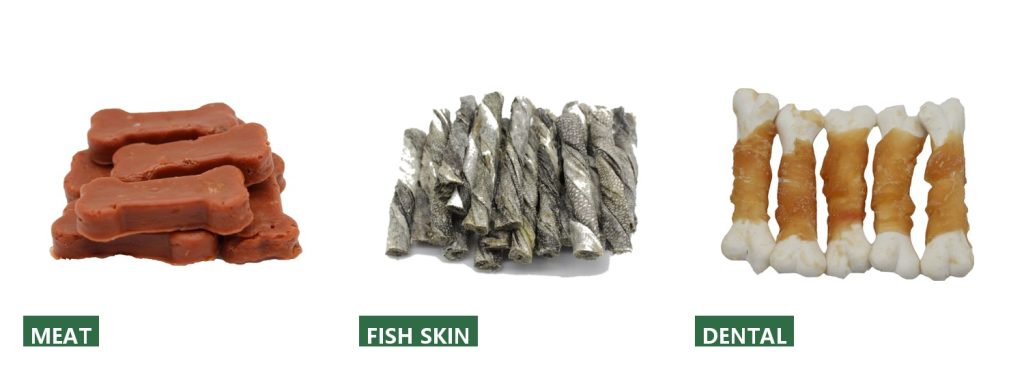
For pet brands, importers, and private-label retailers, choosing a product is only part of the sourcing decision. Another important question comes earlier: Should you start with an existing ready-made product, build a Private Label range, or develop a deeper OEM project?
These three sourcing routes lead to very different requirements for sampling, packaging, product customization, launch speed, and internal resources. There is no single “best” model for every buyer—the right choice depends entirely on what your business is trying to achieve at its current stage.
1. Ready-Made Pet Treats: Best When Speed and Product Validation Come First
A ready-made sourcing route starts with an existing product format or specification that is already available for immediate evaluation.
This route is ideal when you want to:
- Test a new pet treat category with minimal upfront commitment.
- Add products quickly to expand an existing retail range.
- Evaluate supplier quality before investing in deeper customization.
- Compare several finished products before launching a multi-SKU program.
- Reduce development complexity during the first cooperation.
For a new buyer, this approach simplifies early-stage sourcing by grounding discussions in physical samples rather than abstract concepts.
Key Questions for This Stage:
- Is the product format suitable for my target customer?
- Does the specification comply with my market’s standards?
- Can I evaluate the product quality through samples first?
- What standard packaging options are available?
- What compliance and technical documents are ready for this specific item?
- What commercial volume makes sense for a trial order?
When Ready-Made Is the Better Choice:
Choose this route if your core objective is: “I want to validate the product quality, shipping process, and supplier relationship before investing heavily in custom development.”
2. Private Label: Best When Brand Ownership Is the Priority
Private Label is designed for buyers who have an existing brand, or plan to build one, and want to commercialize an existing or selected standard treat formula under that brand. The product base remains standard, while the focus shifts to brand presentation, custom packaging, and market positioning.
Typical Private Label Project Steps:
- Product Selection: Choosing from existing or selected standard treat formulas.
- Packaging Format: Selecting pouch sizes, bag types, and master carton configurations.
- Brand & Labeling: Incorporating custom artwork, language localization, and market-specific regulatory copy.
- Sample Confirmation: Finalizing pre-production packaging proofs and product physicals.
This route offers a practical balance between market launch speed and brand ownership.
When Private Label Is the Better Choice:
Choose this route if your core objective is: “I want to launch or expand my own pet treat brand using an existing product base, without moving straight into deep product development.”
3. OEM: Best When the Product Concept Requires Deeper Project Coordination
OEM projects involve more customized product development. Rather than selecting from an existing portfolio, the buyer works with the supply partner to modify existing specifications or develop a more customized product concept, subject to project feasibility.
Key OEM Project Parameters:
- Product Formulation: Adjusting ingredient ratios, protein sources, or functional additives—subject to feasibility confirmation.
- Physical Specs: Customizing shape, size, texture, density, or moisture levels—subject to feasibility confirmation.
- Packaging & Regulatory: Engineering custom package sizes and destination-specific compliance documentation—subject to feasibility confirmation.
- Feasibility Evaluation: Assessing technical viability, minimum batch sizes, and production scheduling.
Note: OEM projects require formal technical and operational confirmation rather than open-ended customization promises.
When OEM Is the Better Choice:
Choose this route if your core objective is: “I have a distinct product concept and require a reliable supply partner to evaluate, pilot, and coordinate production for my target market.”
4. Practical Buyer Comparison
| Decision Factor | Ready-Made | Private Label | OEM |
|---|---|---|---|
| Product Foundation | Existing product portfolio | Existing or selected standard formula | More project-specific, subject to feasibility |
| Brand Customization | Limited / Standard | Strong (Custom artwork & packaging) | Potentially deeper (Product-specific brand integration) |
| Product Customization | Low | Low to Moderate | Potentially deeper (Shape, ingredients, specs) |
| Development Complexity | Lowest | Moderate | Highest |
| Sample Validation | Important | Important | Essential |
| Packaging Coordination | Basic to Moderate | Critical | Critical |
| Launch Speed | Fastest | Moderate | Requires extended development |
| Best Used For | Market testing & rapid entry | Building proprietary retail ranges | Launching unique, differentiated items |
5. How MOQ Influences Strategic Sourcing
Minimum Order Quantity (MOQ) is more than a commercial baseline—it is a buyer’s risk-management lever. A clear starting MOQ allows brand owners to:
- Test consumer response and sales velocity.
- Verify packaging integrity during international transit.
- Confirm that required product and export documents are clearly identified and available as applicable.
- Limit initial capital and inventory exposure.
HEYUAN PET Commercial Baseline: Standard starting MOQ for current supply programs is 200 kg.
For new category launches, structure your first order around validating the supply chain and consumer acceptance, rather than maximizing unit volume.
6. Using Samples for Comprehensive B2B Evaluation
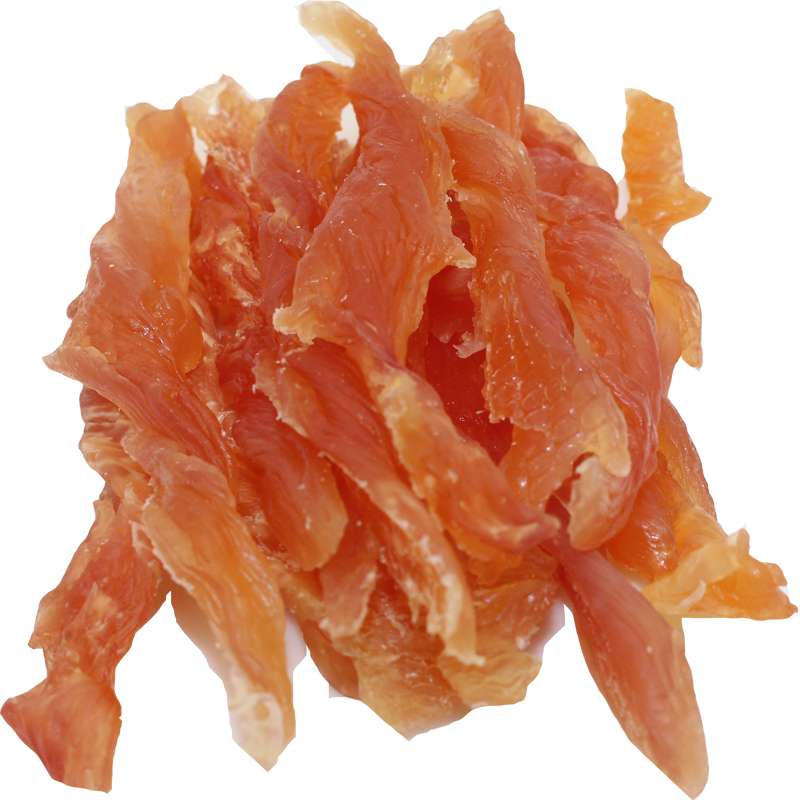
Samples should support a broader B2B evaluation, not just a taste test.
What to Evaluate During Sampling:
- Physical Attributes: Appearance, piece size, color uniformity, and aroma.
- Handling & Texture: Structural integrity, brittleness, and shelf stability.
- Packaging Fit: How the product presents within the intended retail pouch size.
- Compliance: Alignment between sample specifications and local regulatory requirements.
HEYUAN PET Reference Lead Time: Sample preparation is approximately 10 days.
7. Balancing Launch Speed and Customization Depth
Trying to maximize both customization depth and launch speed simultaneously often leads to project friction.
- Speed Priority: If market window and rapid rollout are critical, select an existing Ready-Made or Private Label framework.
- Differentiation Priority: If unique market positioning is required, allocate sufficient time for OEM technical evaluation, sample iterations, and packaging sourcing.
HEYUAN PET Reference Lead Time: Bulk order reference lead time is approximately 30–40 days, subject to the confirmed product, packaging and project requirements.
8. Packaging as a Sourcing Route Decision Point
Packaging complexity often dictates which sourcing route is required:
- Ready-Made: Usually prioritizes existing product and available packaging options for faster evaluation.
- Private Label: Focuses on branded packaging, labels and retail presentation.
- OEM: May require deeper coordination between product specifications and packaging requirements.
No sourcing route should promise a specific packaging technology or material that has not been confirmed for the buyer’s project.
9. The Validation Order Framework
For international B2B buyers, the initial order should answer six core operational questions:
- Does the product meet customer expectations in real-world retail conditions?
- Is supplier communication clear, prompt, and transparent?
- Are packaging artwork and product specs executed accurately?
- Are the required product and export documents clearly identified and available as applicable?
- Can the agreed FOB Qingdao shipment process be executed as planned?
- Should the next order continue with Ready-Made, move to Private Label, or explore deeper OEM development?
10. Simple Decision Matrix
[Start Sourcing Evaluation]

├─► Need fastest launch & market validation? ─────► Choose READY-MADE

├─► Need brand ownership on an existing product base? ───► Choose PRIVATE LABEL

└─► Need a more customized product concept? ──────► Explore OEM
Evolution Strategy: One practical progression is to start with Ready-Made products for market validation, move to Private Label as brand requirements become clearer, and explore deeper OEM development when the business case supports it.
Conclusion
Ready-Made, Private Label, and OEM represent three distinct levels of customization, timeline commitment, and development focus. The key to successful sourcing is choosing the model that matches your business stage and commercial goals.
About HEYUAN PET
HEYUAN PET draws on an international-standard pet-treat production base in Weifang, China, to provide international B2B buyers with pet-treat supply, OEM / Private Label, packaging, quality and documentation support, and FOB Qingdao export service.
- Current product portfolio: 25 products
- Starting MOQ: 200 kg
- Sample preparation: approximately 10 days
- Bulk order reference lead time: approximately 30–40 days
- Trade term: FOB Qingdao
🌐 heyuanpet.com